
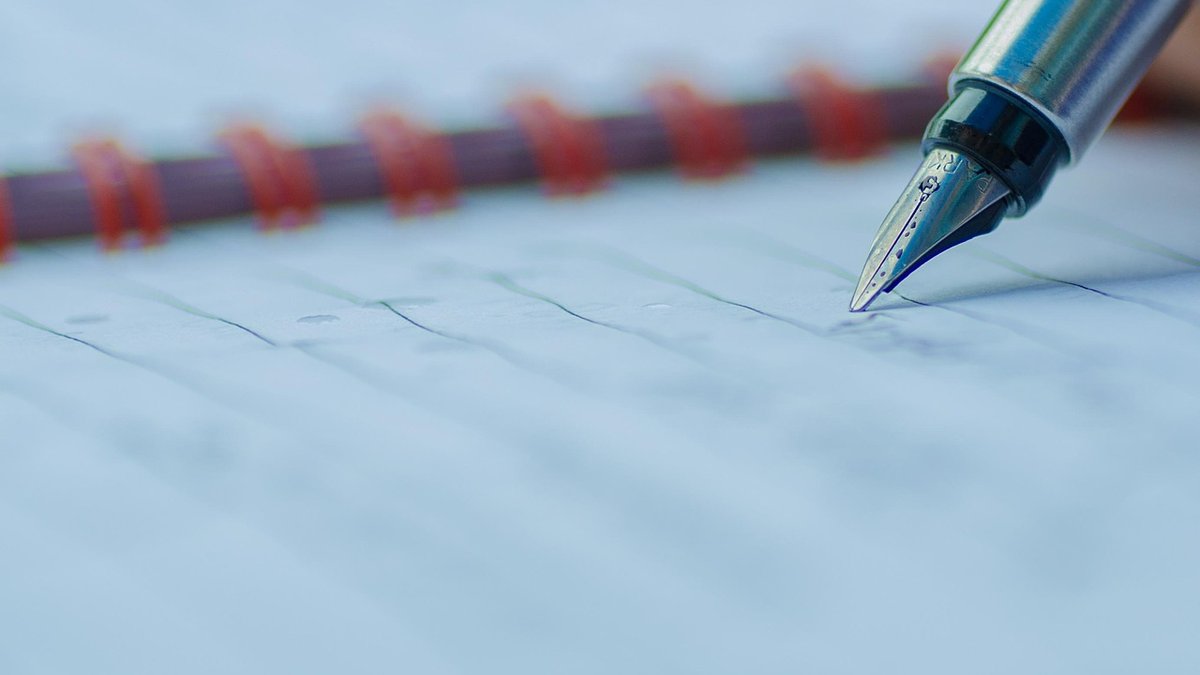
A fountain pen is only half of the writing equation. The nib lays down a wet line of ink, but the paper decides what happens next. On the wrong sheet, even a well-tuned pen can feel scratchy, feather into a fuzzy mess, or bleed through to the page beneath. On the right paper, the same pen feels smooth, the line stays crisp, and your ink shows its true colour, shading, or sheen. If you keep a journal, plan your week, or take notes in meetings, paper quality affects how quickly you can write and whether you can use both sides of the page. The key is understanding three things: paper weight, coating, and absorbency.
Paper weight is usually given in grams per square metre, or gsm. Standard office paper is around 80gsm. Notebook paper often ranges from 70gsm to 100gsm, while premium journals can be 120gsm or more. Heavier paper feels more substantial and generally reduces show-through, but weight alone does not guarantee fountain-pen friendliness. A thick, absorbent sheet can still bleed badly, while a lighter, coated sheet can handle a wet nib beautifully. Think of gsm as a clue about thickness and opacity, not a full verdict on performance.
If you write on both sides, look for a paper that balances weight with a smooth, sealed surface. If you mainly write on one side, a lighter paper may be perfectly adequate.
Most fountain-pen-friendly paper has a coating or sizing treatment. Sizing is a starch or gelatine-like finish added during manufacturing; coating is a clay or mineral layer that creates a smoother surface. Both affect how ink sits on the page. Coated or well-sized paper keeps ink closer to the surface, so lines stay sharp and inks show shading and sheen. The trade-off is slower drying times, especially with wet inks and broad nibs. Uncoated, absorbent paper drinks ink quickly, which suits fast notes, but often produces wider lines, feathering, and bleed-through.
Absorbency drives the behaviours you notice most:
Your nib and ink matter too. A fine, dry nib on absorbent paper can feel controlled and quick. A broad, wet nib on the same paper may bleed and feather. A dry ink on coated paper can feel skippy, while a wet ink on coated paper can be a joy—if you avoid smudging.
Start with how you actually write. For quick meeting notes, shopping lists, and phone-call scribbles, fast drying matters more than sheen. A slightly absorbent 80–90gsm notebook may suit you, especially with a fine nib and a drier ink. For journaling, letters, and creative writing, you may prefer a coated 90–120gsm paper that shows off ink colour and lets you use both sides. If you use fountain pens alongside highlighters or brush pens in a bullet journal, test those tools too; some papers resist fountain pen ink but buckle under wet markers.
Left-handed writers should pay extra attention to dry time. A coated paper that feels luxurious can smudge under a trailing hand. Try a finer nib, a faster-drying ink, or a blotter sheet. If portability matters, remember that heavier paper means a heavier notebook. A 200-page journal at 120gsm can be surprisingly weighty in a bag.
Never assume that a beautiful cover or a high gsm means good fountain-pen performance. Buy or request sample sheets first. Many stationery shops sell loose-leaf sample packs, and some online retailers offer paper samplers. If you can visit a shop, take your own pen and ink, and ask to test a sheet. It feels bold, but it is the only reliable way to know.
Build a simple test page:
Test every pen and ink combination you use regularly. What works for a fine nib and a blue-black ink may fail with a broad stub and a shimmering orange. Once you find a paper that suits your habits, commit to the bound journal with confidence. Until then, sample sheets are your cheapest insurance against a shelf full of unused notebooks.

Hi, my name is Anthony kuber. I am artist and fashion designer.
I love to travel and writing blogging.
Your email address will not be published. Required fields are marked *
Software Developer & Writer
Hey, I'm Diva, a developer and writer blending code and creativity. I'm driven by a deep curiosity and a relentless pursuit of excellence. Join me as I craft digital solutions and captivating stories.


